Process Testing
Beyond Compliance
Compliance testing tells you whether you're meeting your permit limits. Process testing tells you why. It's the difference between reacting to a problem on your DMR and catching it before it gets there.
Eastex provides operational testing designed to give operators the data they need to make real-time adjustments. Whether you're troubleshooting a foaming event, tracking sludge age, or optimizing your F/M ratio, we deliver the results fast enough to act on them.
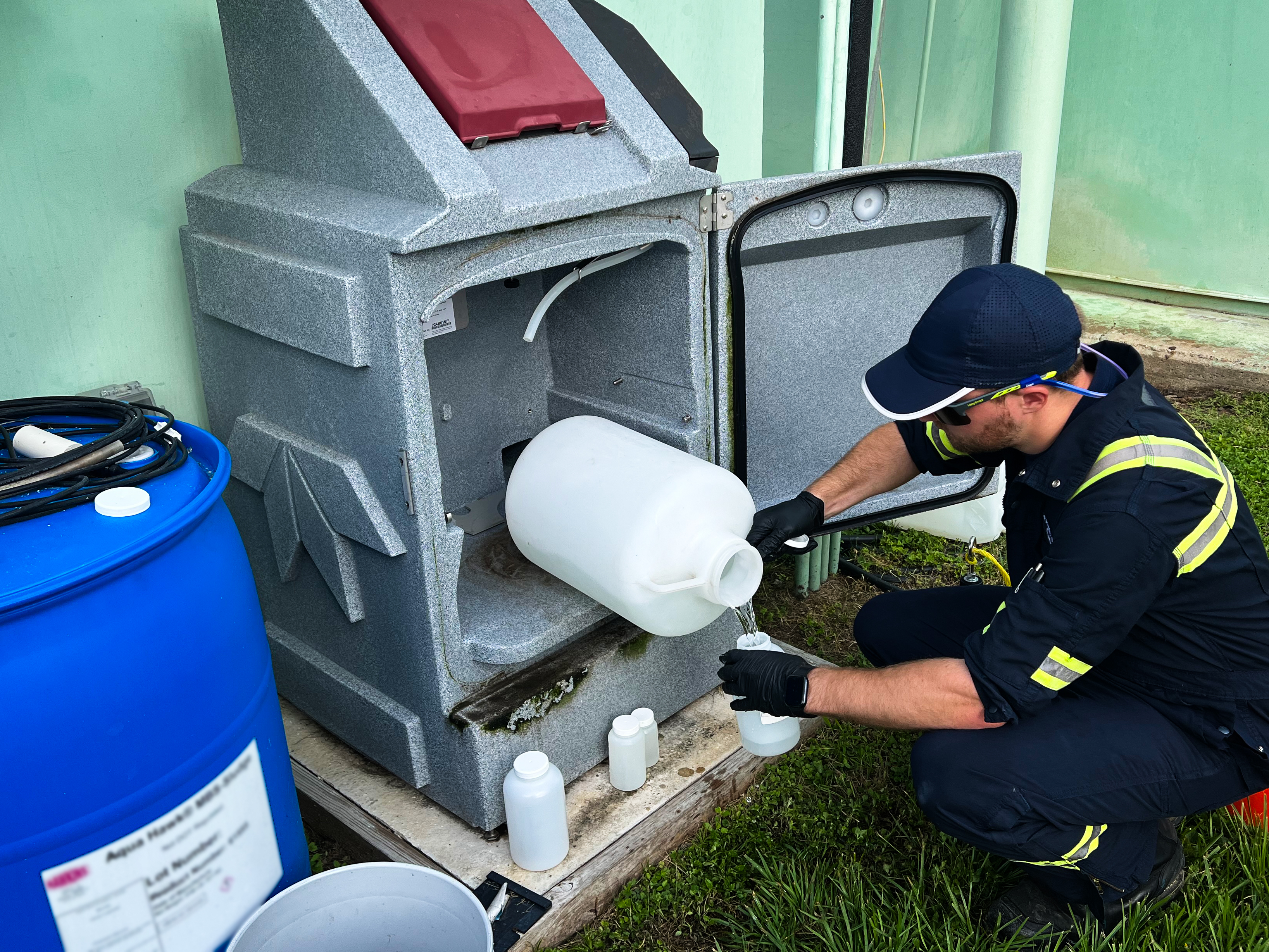
What We Test
Process-critical parameters for wastewater treatment operations.
Conventional Parameters
- BOD / CBOD
- TSS / VSS
- Ammonia
- pH
- Dissolved Oxygen
- Temperature
- Turbidity
Process Control
- MLSS / MLVSS
- Sludge Volume Index (SVI)
- F/M Ratio
- Mean Cell Residence Time (MCRT)
- Sludge Age
- Settleability (GSA)
- Alkalinity
Microscopic Evaluation
- Floc structure analysis
- Filament identification
- Micro-organism diversity
- Gram and Neisser staining
- Health indicators
Microscopic analysis reveals what the numbers don't. Floc structure, filament type, and organism diversity tell you whether your biology is healthy, stressed, or heading for a problem.
Nutrients
- Total Phosphorus
- Nitrate
- Nitrite
- TKN
- Total Nitrogen
Nutrient monitoring is increasingly important as TCEQ adds phosphorus and nitrogen limits to Texas permits.
"A wastewater treatment plant is basically a bug factory. You're growing bacteria to clean the water."
Eastex Newsletter, 2017
Troubleshooting Support
A wastewater treatment plant is basically a bug factory. You're growing bacteria to clean the water, and when the biology isn't happy, your effluent quality suffers. Process testing helps you diagnose what's going wrong.
Common issues we help operators investigate:
- Foaming and bulking — filament identification, F/M adjustment, SVI trending
- High BOD/CBOD in effluent — distinguishing overloading from toxic events
- Nitrification loss — alkalinity monitoring, sludge age verification, ammonia tracking
- Poor settling — microscopic evaluation, floc structure, organism diversity
- Dissolved oxygen issues — seasonal monitoring, aeration optimization
- Permit limit exceedances — root cause identification before the next reporting period
Who Uses Process Testing
Process testing is most valuable for facilities with activated sludge or biological treatment systems. If you have operators making daily decisions about aeration, wasting, chemical addition, or process adjustments, this data makes those decisions better.
We work with operations companies managing multiple plants, MUDs with treatment facilities, and industrial operations with biological treatment systems. If you're not sure which process parameters would be most useful for your facility, we can help you build a monitoring program.
From Plant to Bench
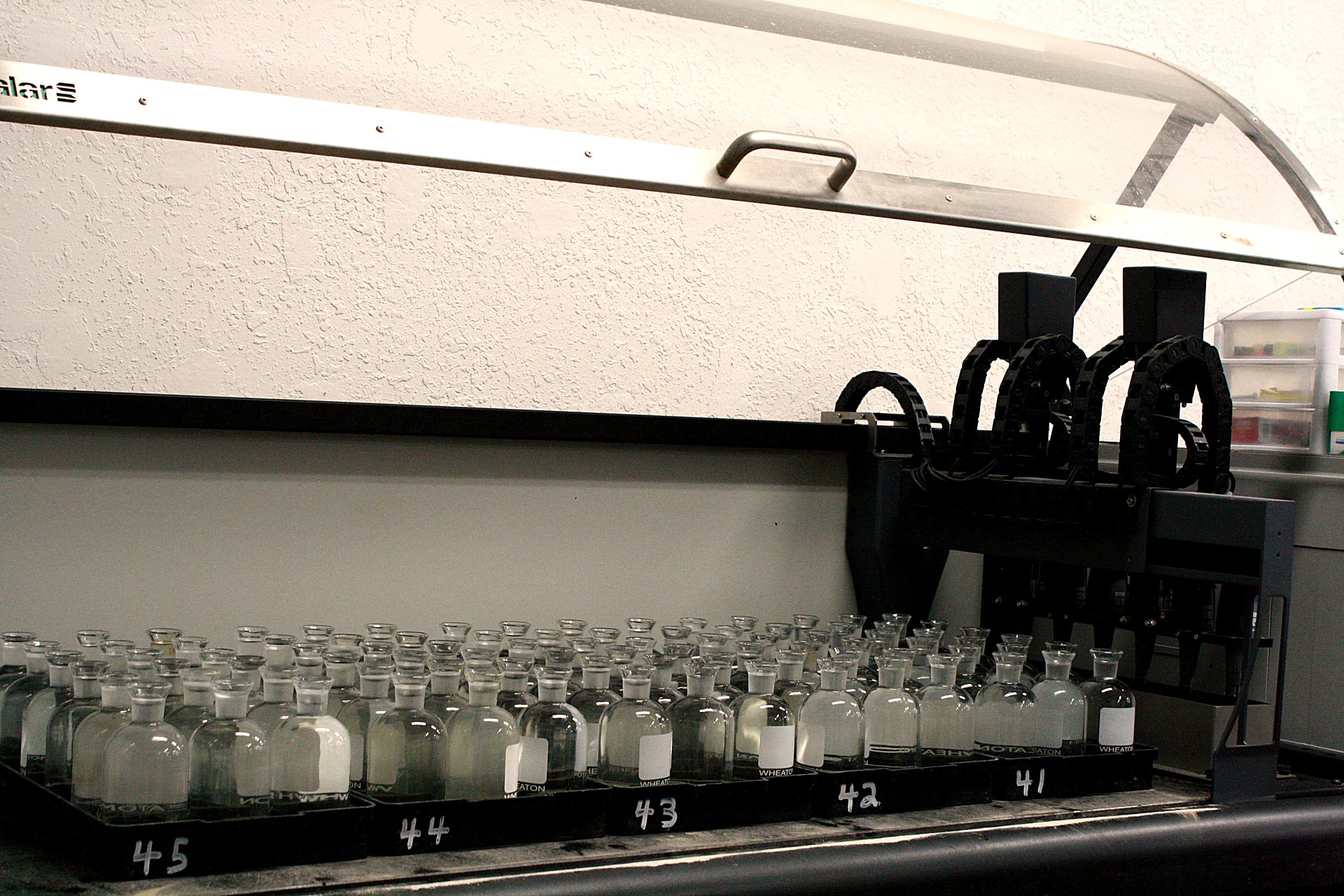
Once a sample reaches the lab, process testing runs on a tight clock. BOD seeds get inoculated, dilutions get prepared, and DO readings start their five-day countdown. Nutrients and conventional parameters move through their respective benches in parallel.
We run high-volume process workflows every day. Our scheduling and LIMS are built around the turnaround operators actually need, not around generic batch processing.
Need Process Data?
Tell us about your facility and we'll recommend the right monitoring program for your operations.